Regular Program

CCMS Colloquium

The Cinema and Media Studies Colloquium is a regular lecture series featuring emerging and established scholars from adjacent disciplines who are expanding the horizons of the field. The program aims to examine the latest research trends in various areasโ€”such as film theory, media archaeology, and digital cultural studiesโ€”while fostering robust academic discourse and professional insight.

The Cinema and Media Studies Colloquium is a regular lecture series featuring emerging and established scholars from adjacent disciplines who are expanding the horizons of the field. The program aims to examine the latest research trends in various areasโ€”such as film theory, media archaeology, and digital cultural studiesโ€”while fostering robust academic discourse and professional insight.

Nora M. Alter

Contrapunctual Strategies

Conventionally within montage theory, attention is placed on the shots that are put together and the effects of that operation. Whether it be successive linear progression, parallel construction, dialectical opposition, or rhythmic interval composition, theorists have tended to focus on the overall resulting image sequence of the montage procedure. Montage is a building process that is based on leaving things out with the goal of presenting a whole or totality. For this reason, visual analogies to mosaics, fragments, and collages are popular. Rarely is attention paid to sound, despite the early dictum by Soviet theorist VI Pudovkin who stressed that sound must be treated as its own distinct montage element and that is needs to be used disjunctively or as a counterpoint to the visual track. Indeed, sound has traditionally been left out of theoretical discussions of montage theory except as it is employed for the purposes of transition as in a sound bridge connecting two disparate scenes. In these instances, sound, usually music, serves to elide the temporal and spatial distance that separates shots. It functions as a sonic veil that helps conceal the mark of the suture, the seam that holds together the montage of the filmic work.
However, sometimes sound is used for purposes of disruption and dissonance. Guided by Pudovkinโ€™s theory of how the sonic should be deployed contrapuntally, followed by T.W. Adorno and later E. Saidโ€™s theory of the counterpoint, I will examine several media works that rely on counterpoint to produce palimpsestic texts.ย ย ย 

Nora M. Alter is a scholar of comparative film and media arts at Temple University in Philadelphia, Pennsylvania. She has published widely on German and European Studies, Film and Media Studies, Cultural and Visual Studies and Contemporary Art. She is author of several books including Vietnam Protest Theatre: The Television War on Stage (1996), Sound Matters (2004), Chris Marker (2006), Essays on the Essay Film (2017), The Essay Film after Fact and Fiction (2018) and most recently Harun Farocki: Forms of Intelligence (2024).


Speaker : Nora M. Alter
Date : April 22 (Wed) 18:30, Art Center (301 Building), RM 103
Format : This event is in-person only. Registration is required via the QR code.

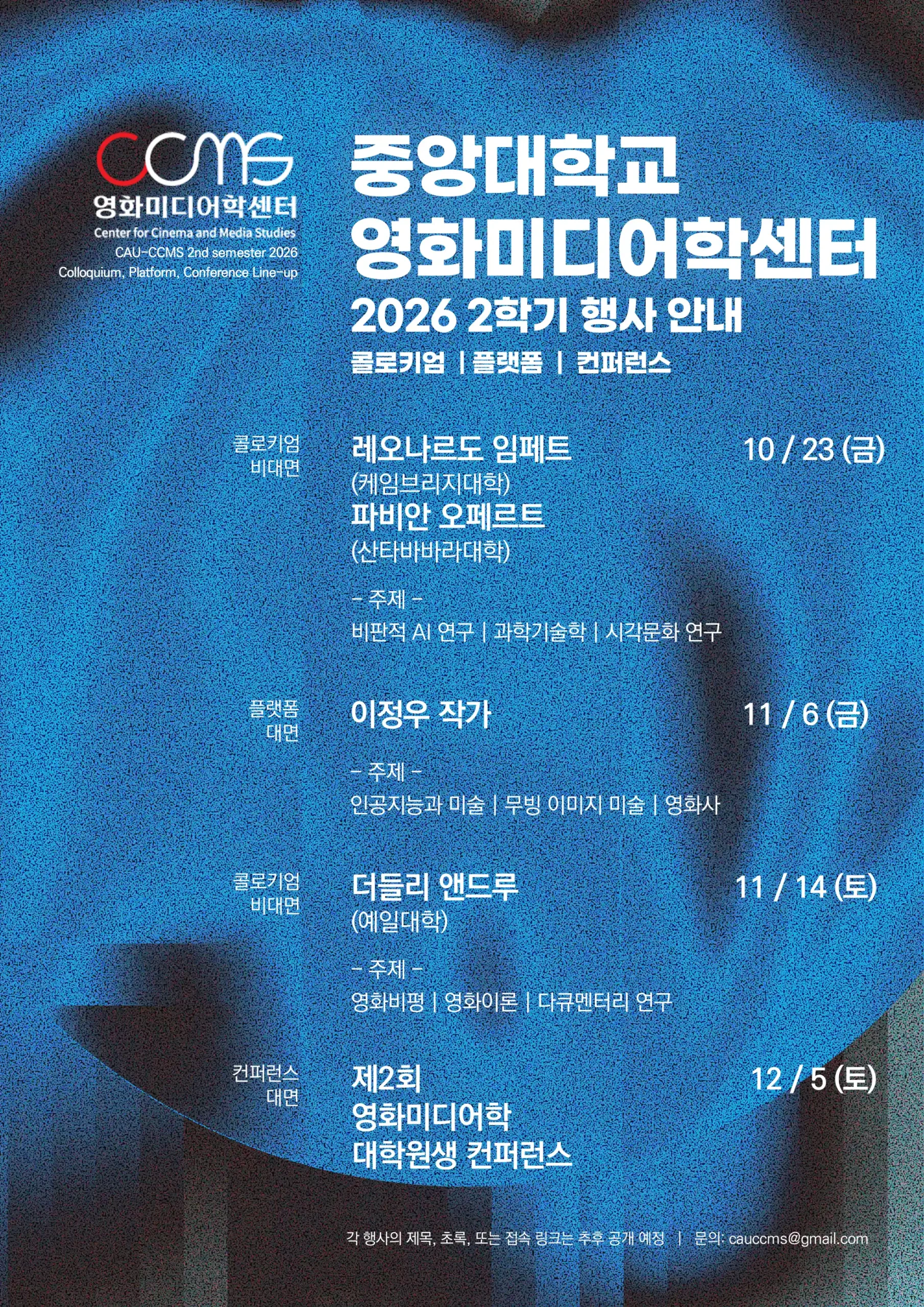
Upcoming Lecture Series

03/20/2026

Wendy Hui Kyong Chun

Critical AI Studies
Science and Technology Studies
Critical Race Studies

03/20/2026
04/22/2026

Nora M. Alter

Essay Film and Video
Film Criticism
Art of Moving Image

04/22/2026
05/23/2026

Lee Jangwook, Il-Hwan

Experimental Film and Video
Film Criticis
Art of Moving Image

05/23/2026

Past Colloquia

Click on each poster to view detailed information. Sessions marked with a video icon (๐Ÿ“ผ) are available for replay on the CAU-CCMS YouTube channel.

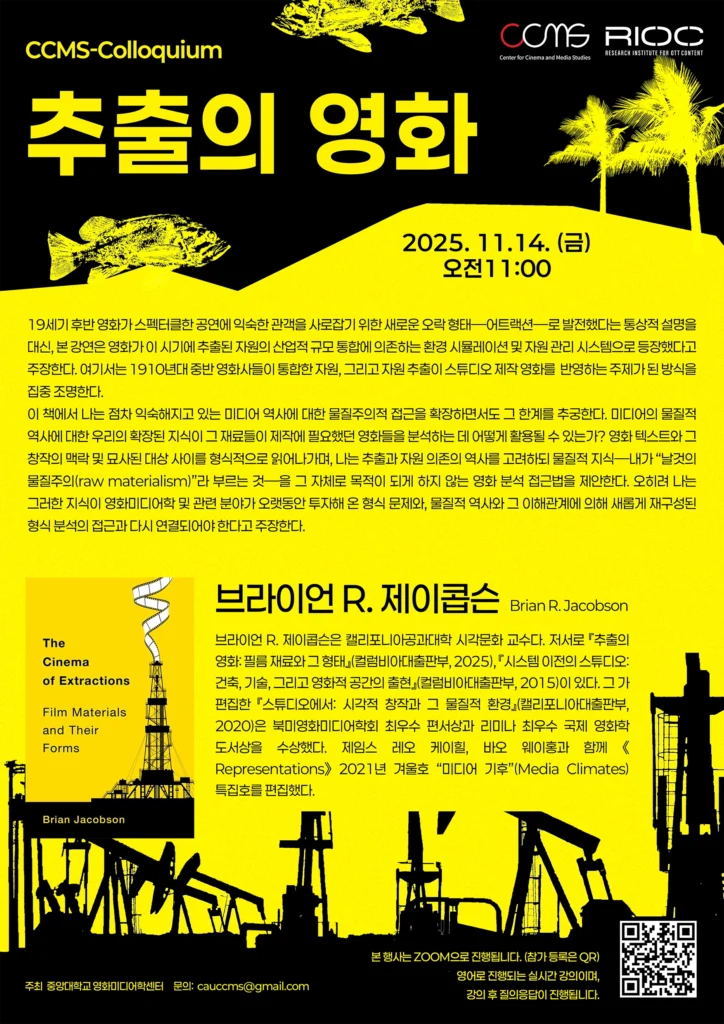
Brian R. Jacobson ๐Ÿ“ผ
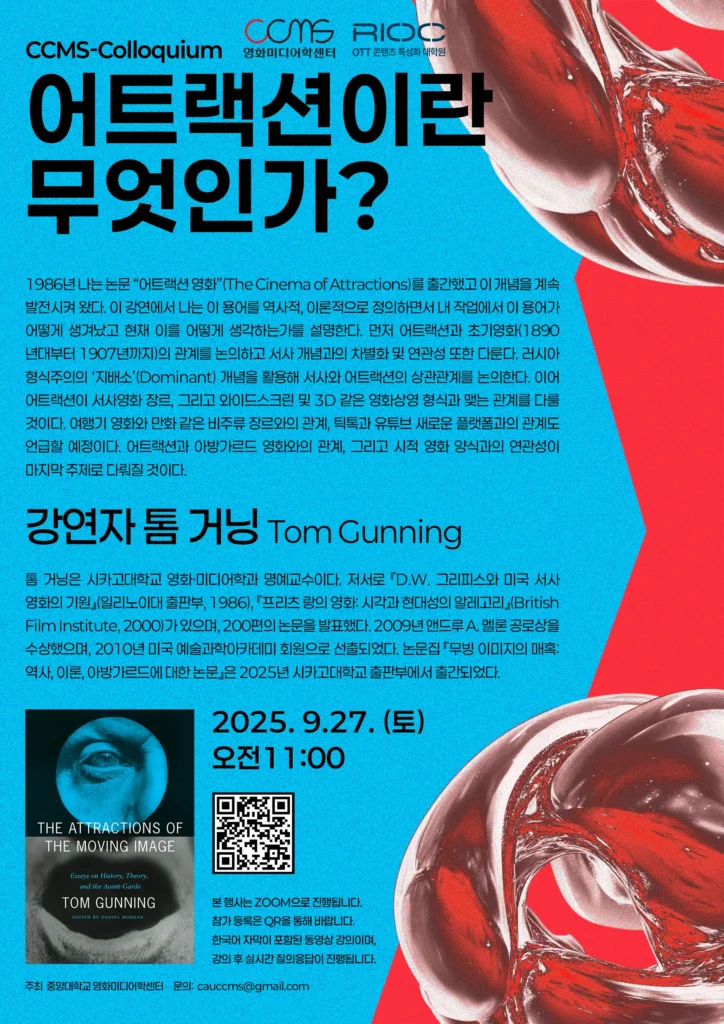
Tom Gunning ๐Ÿ“ผ
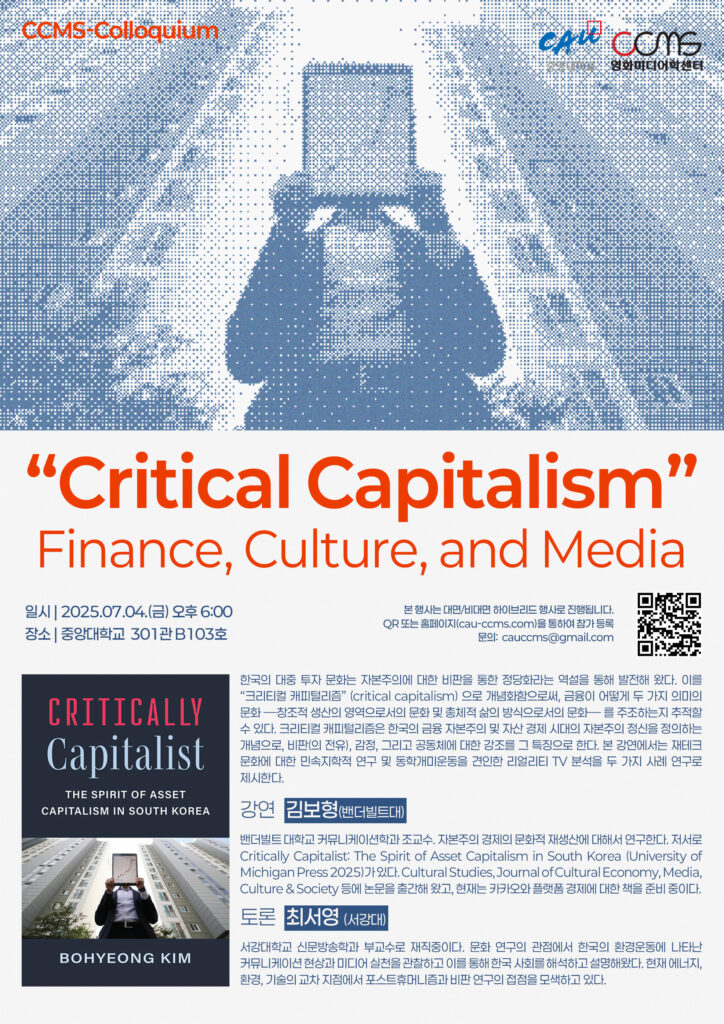
Bo Hyung Kim
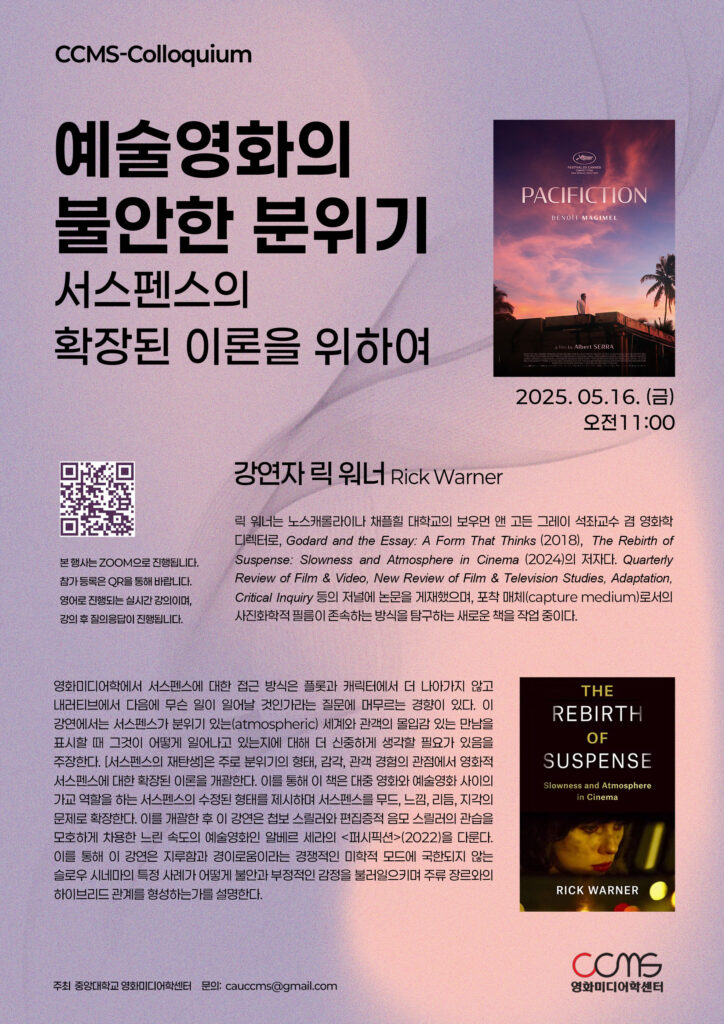
Rick Warner ๐Ÿ“ผ
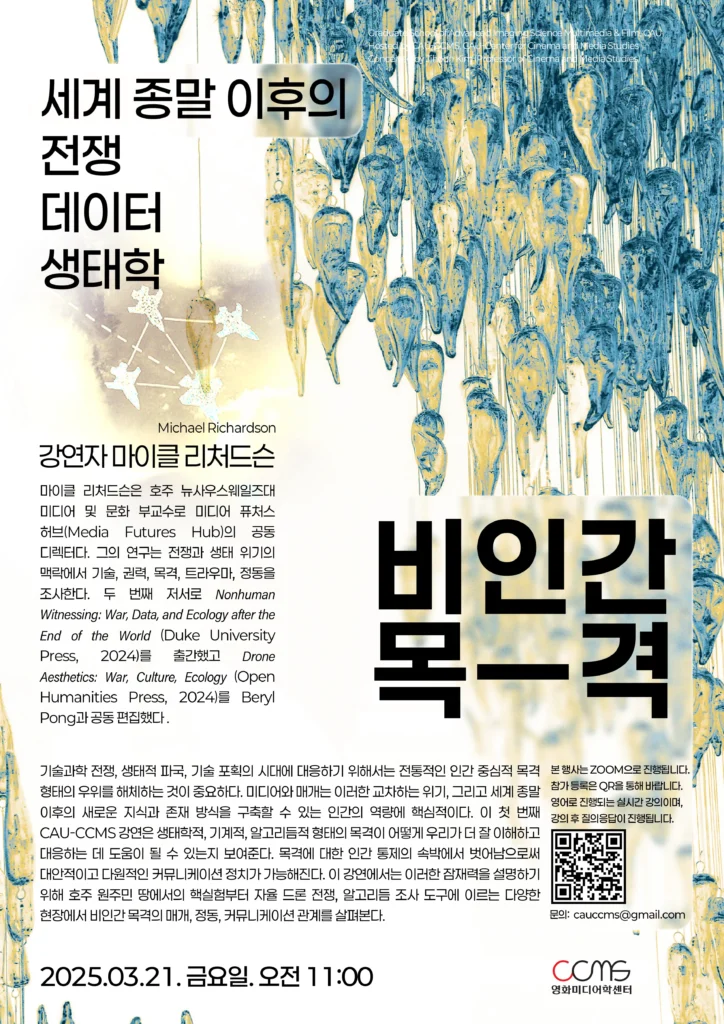
Michael Richardson ๐Ÿ“ผ
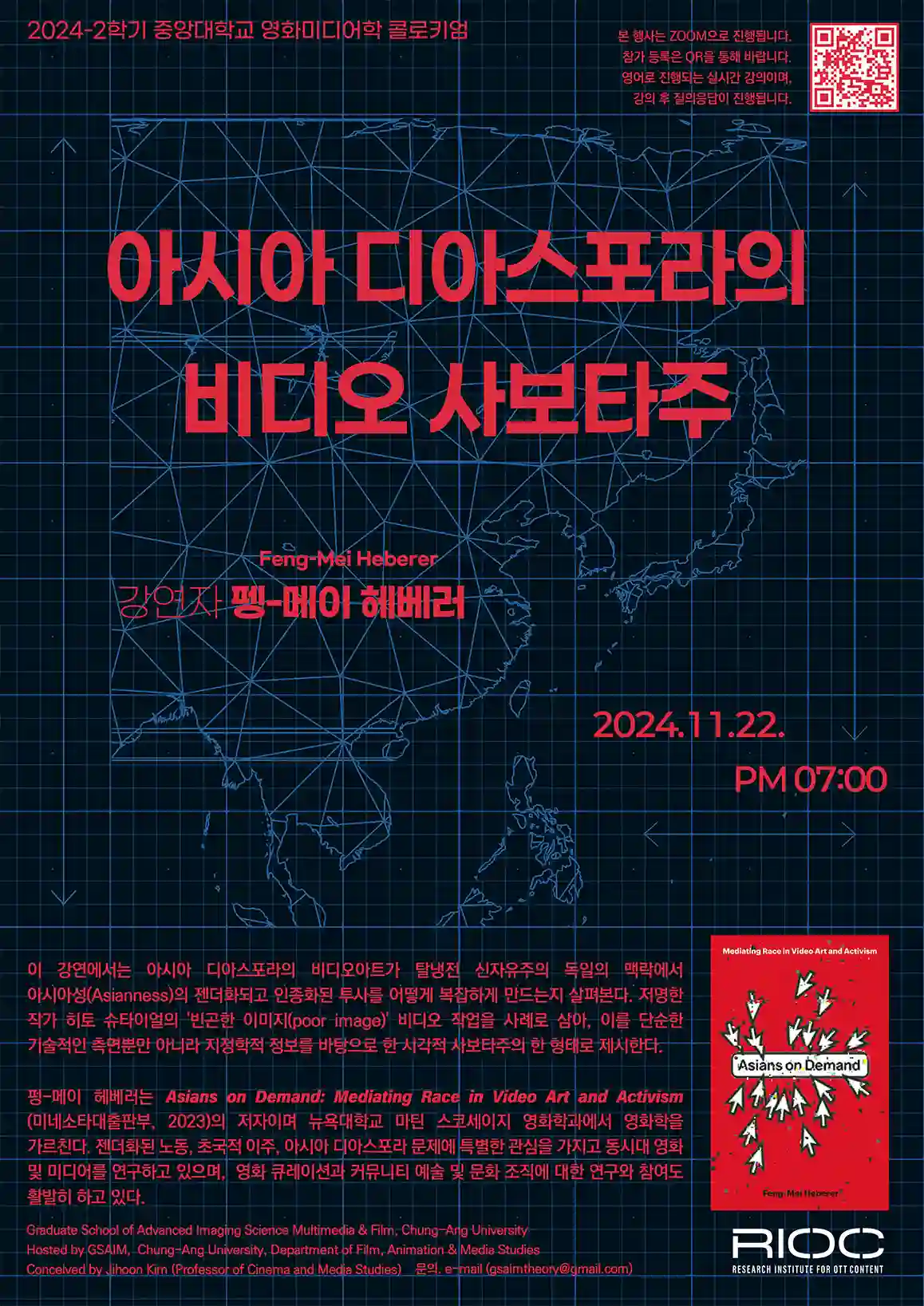
Feng-Mei Heberer
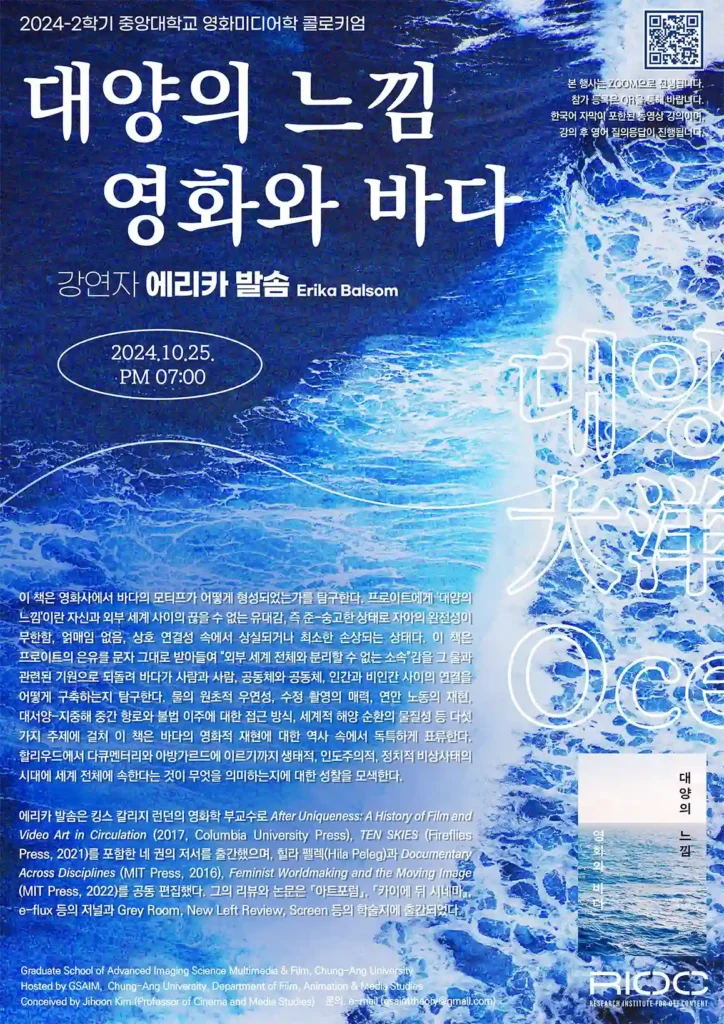
Erika Balsom
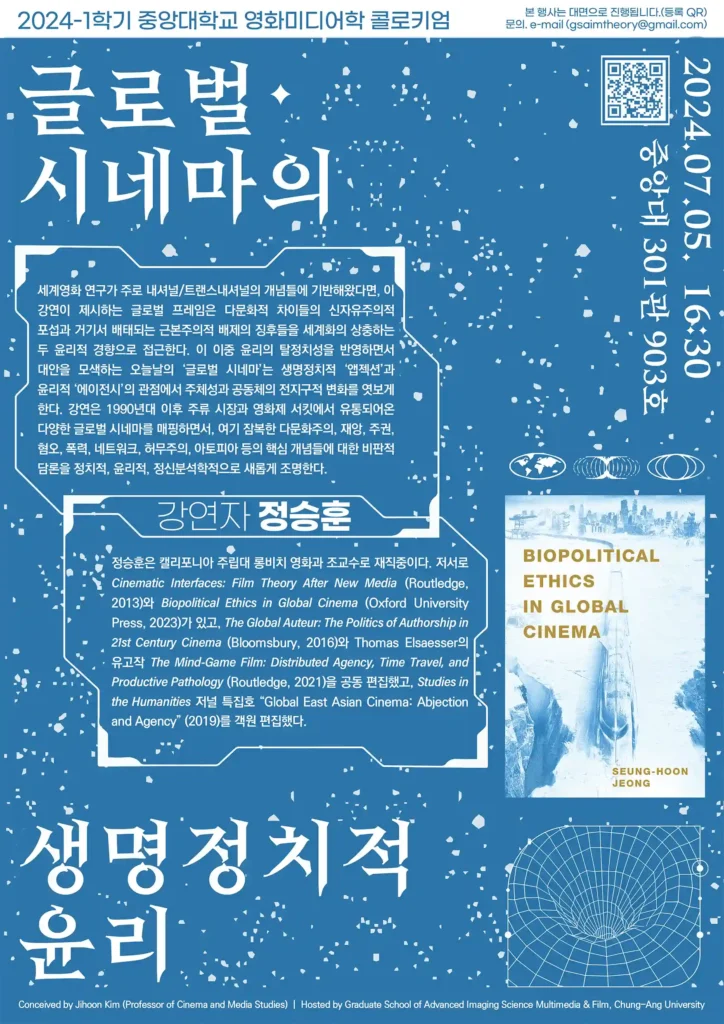
Seung-Hoon Jeong
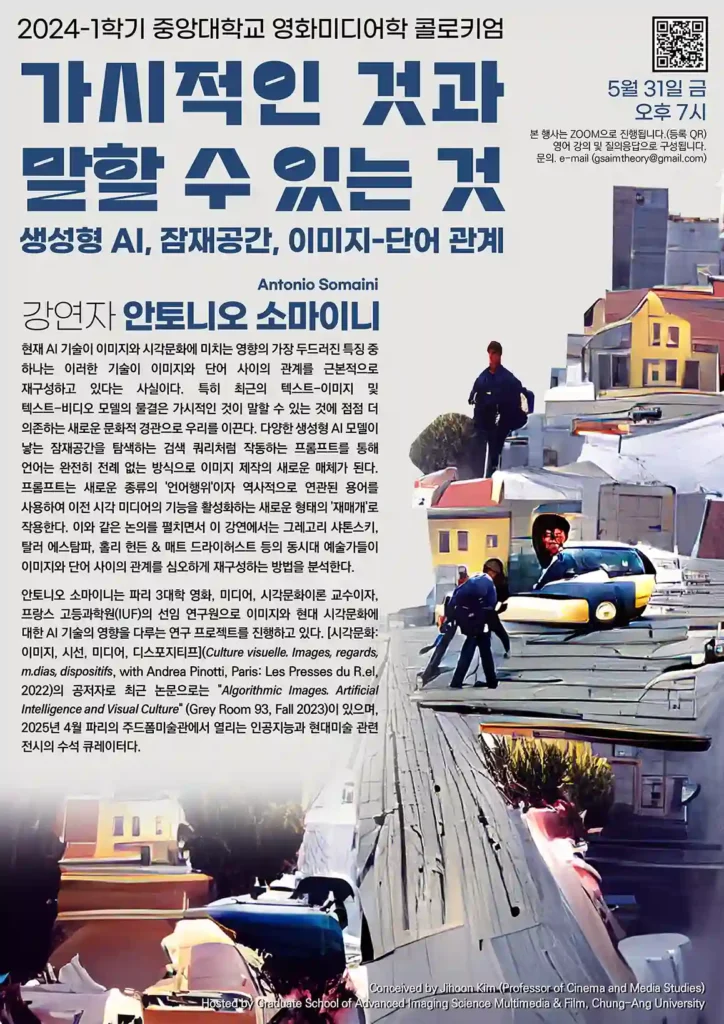
Antonio Somaini ๐Ÿ“ผ
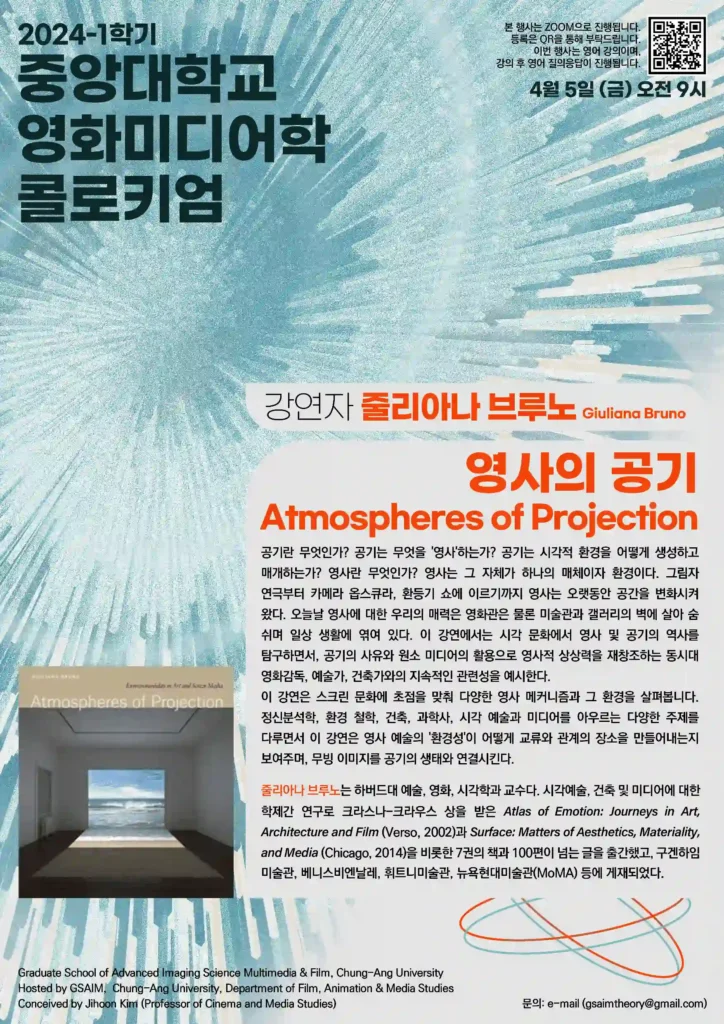
Giuliana Bruno
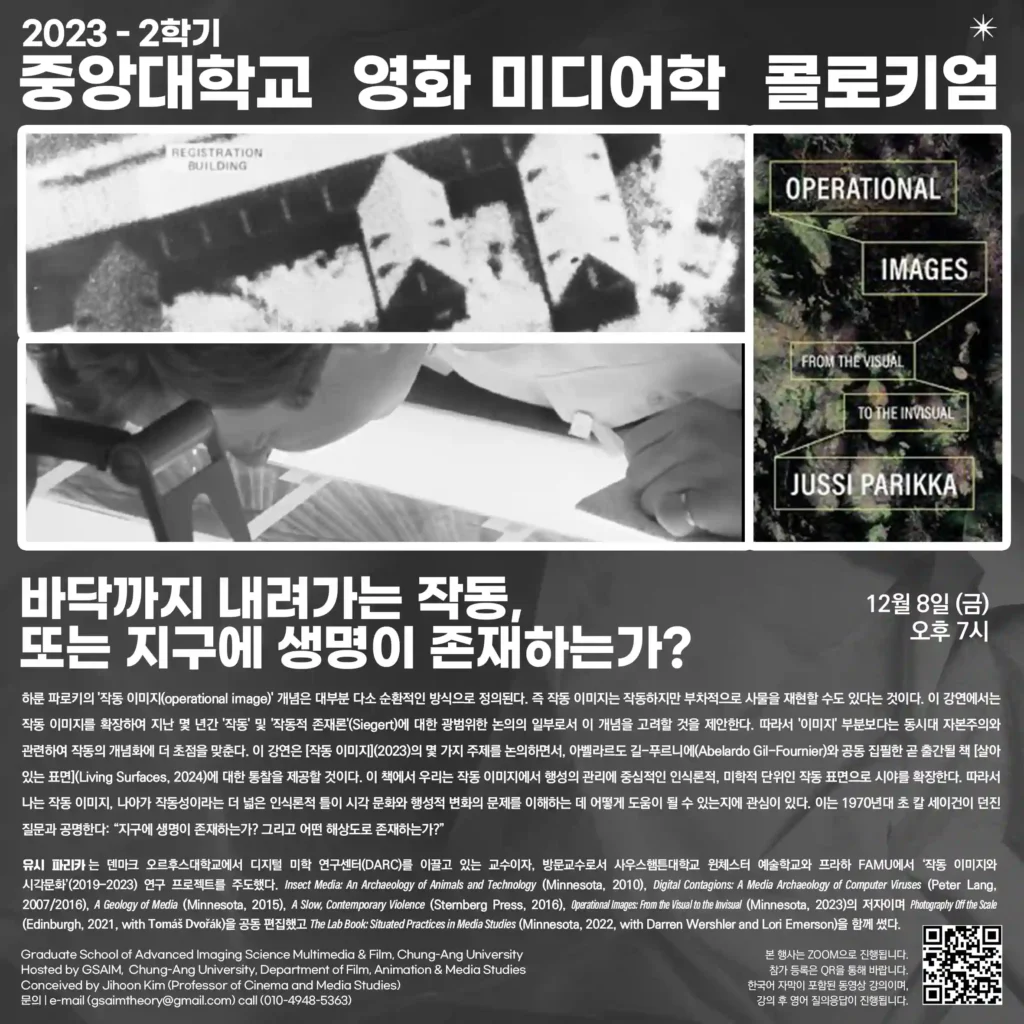
Jussi Parikka ๐Ÿ“ผ
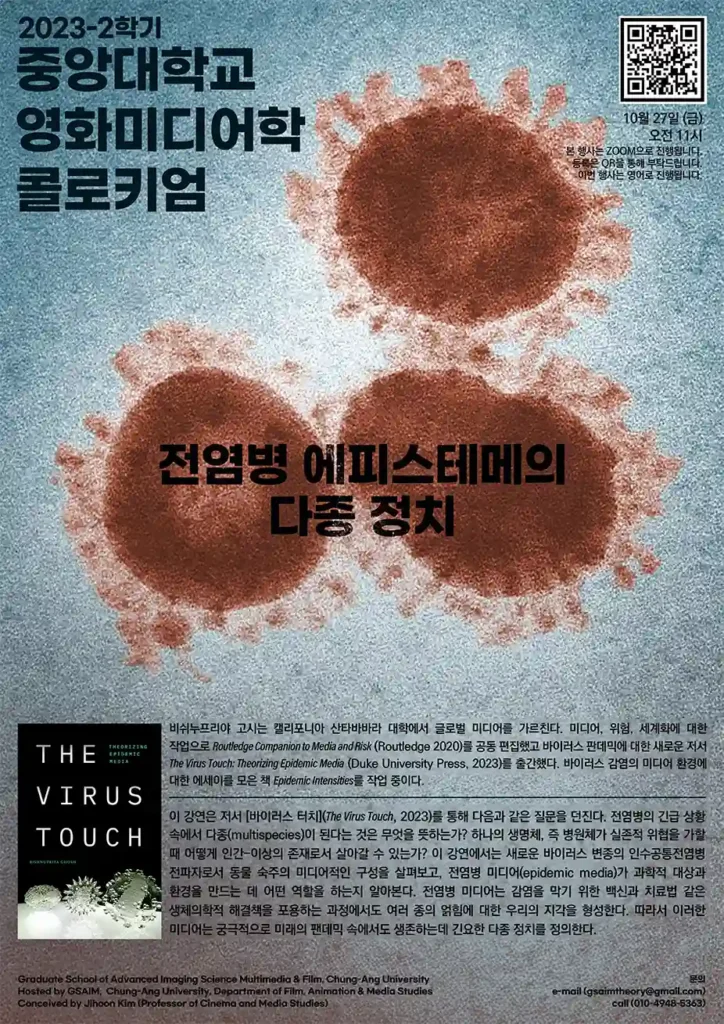
ย Bishnupriya Ghoshย  ๐Ÿ“ผ
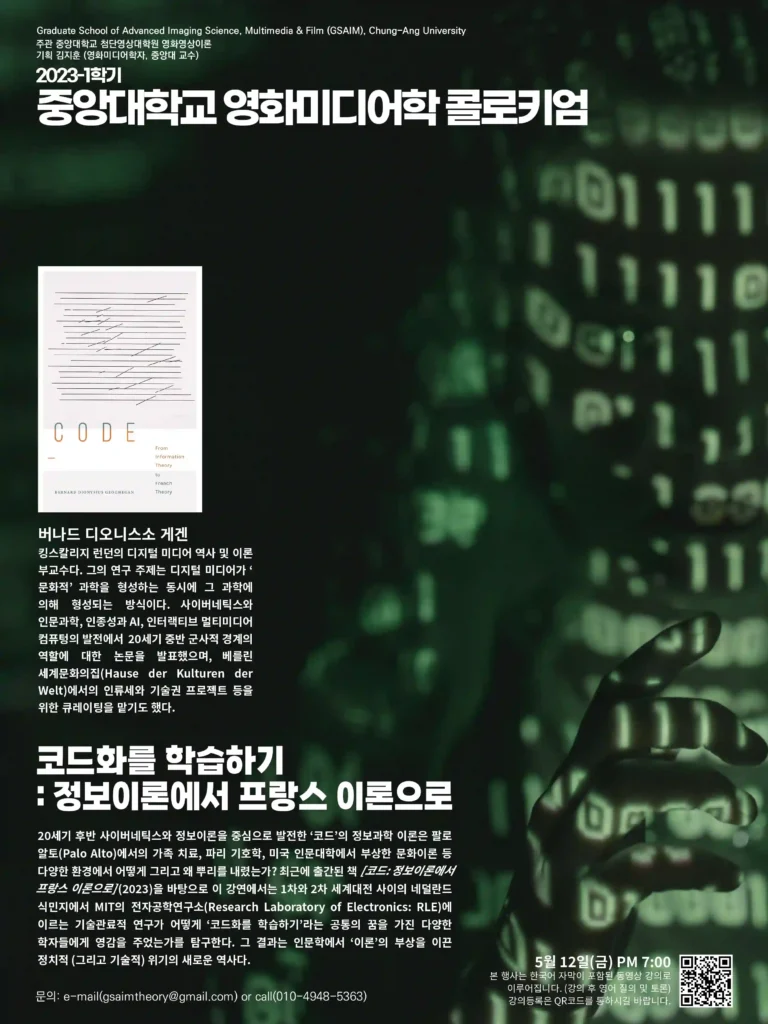
Bernard Dionysius Geoghegan ๐Ÿ“ผ
Bu Chan Yong
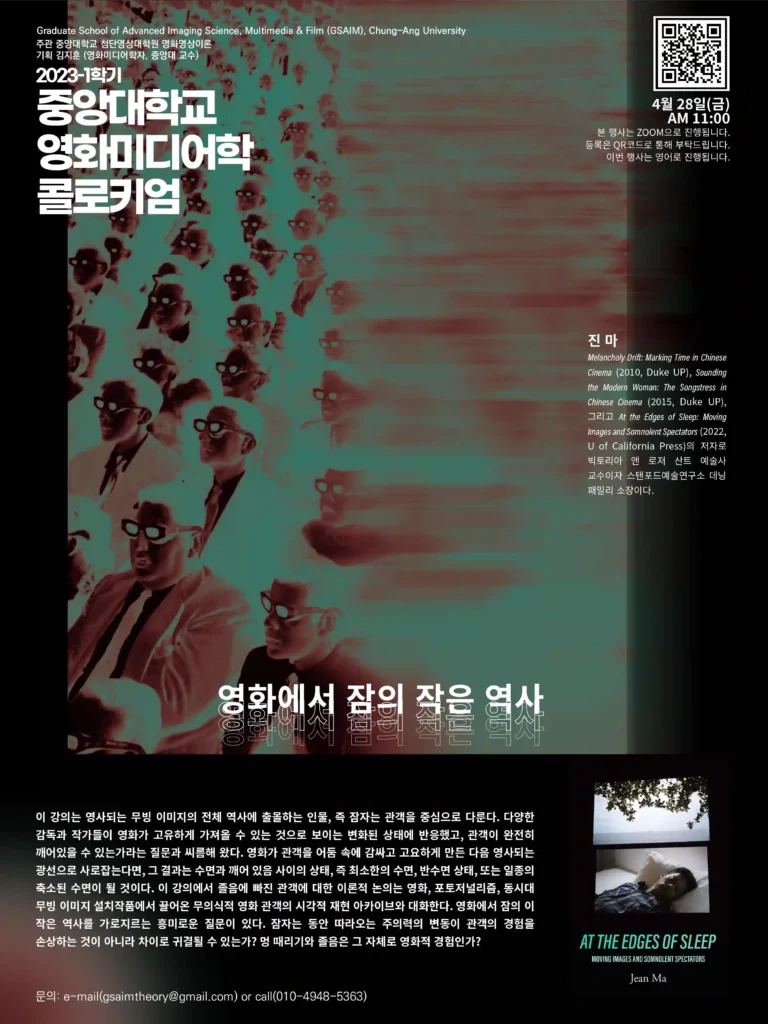
Jean Ma
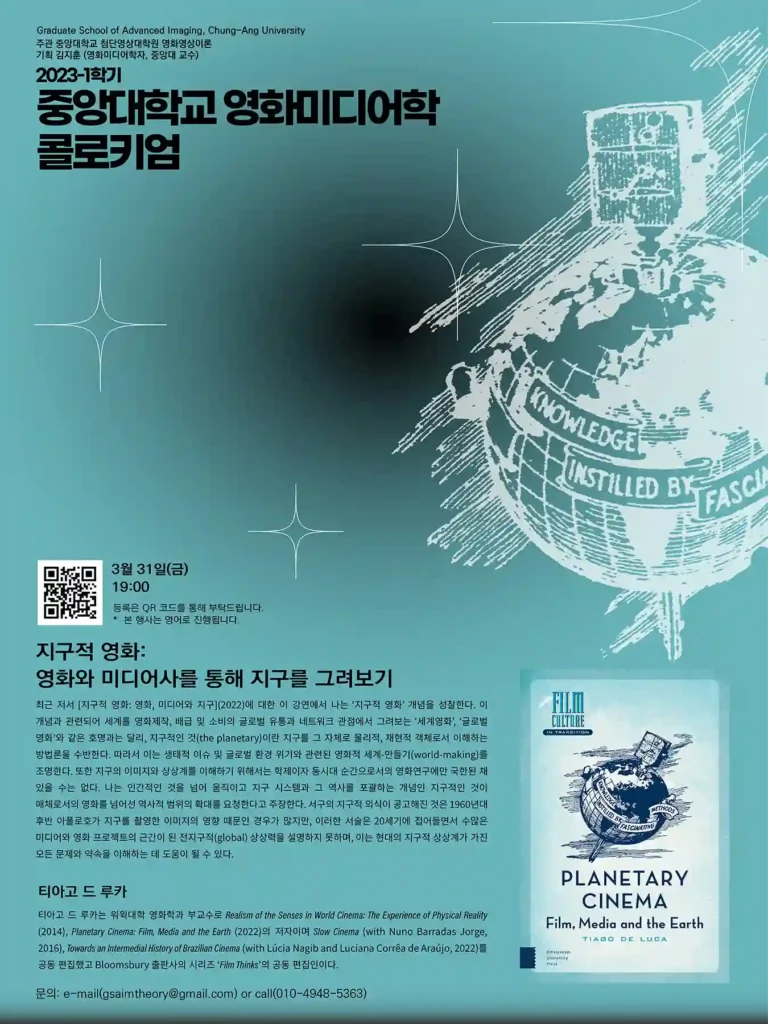
Tiago de Luca
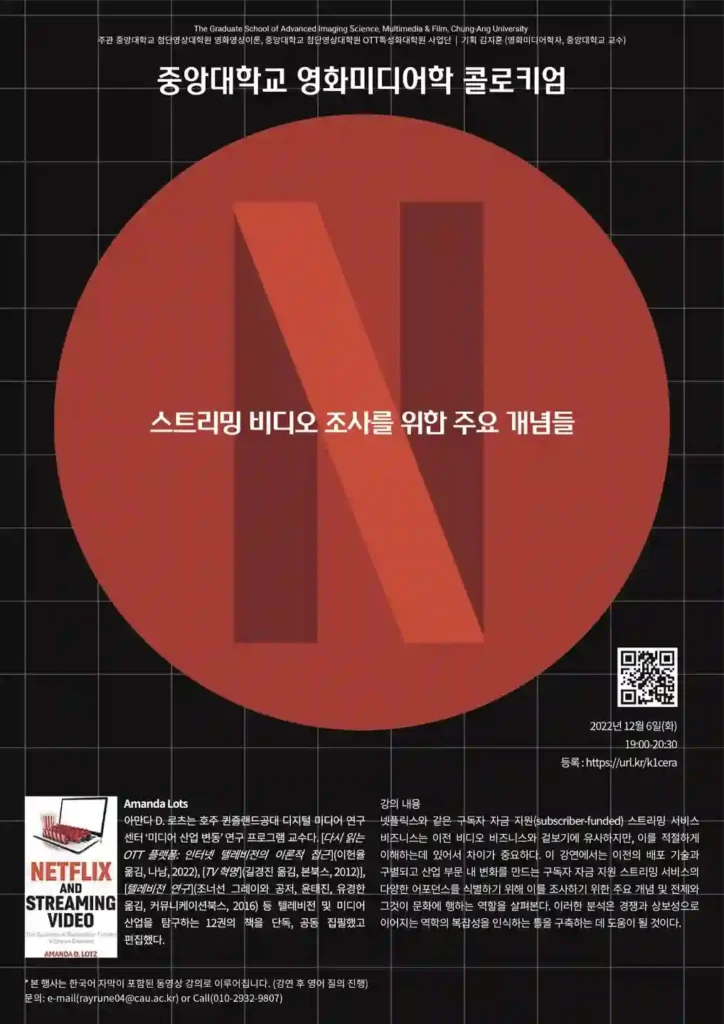
Amanda D. Lotzย 
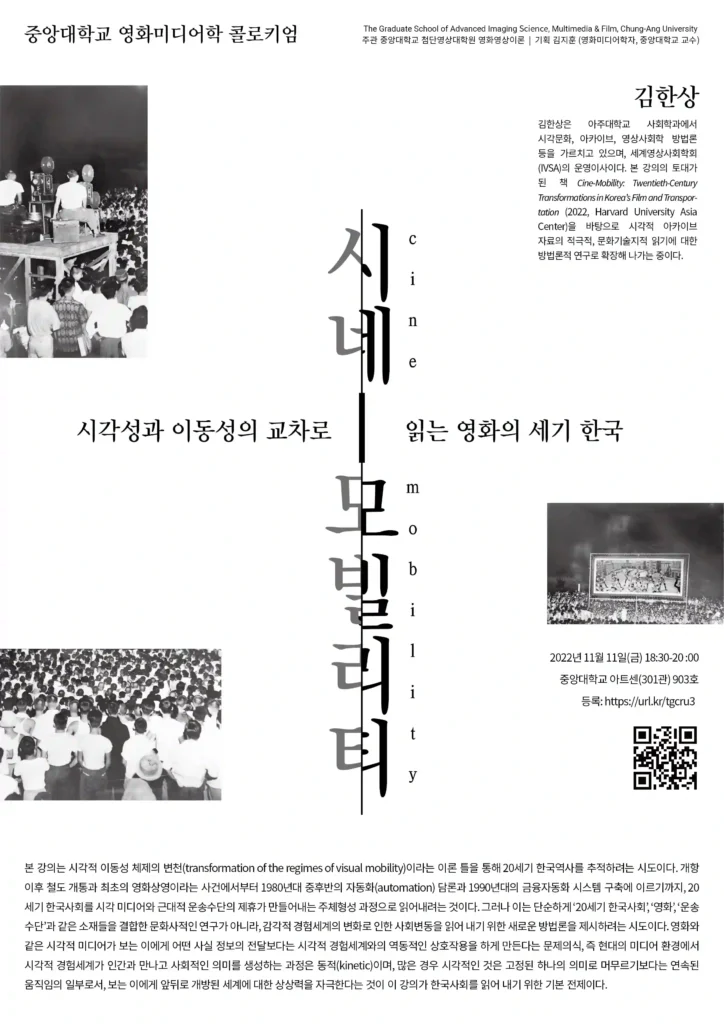
Kim Han Sang
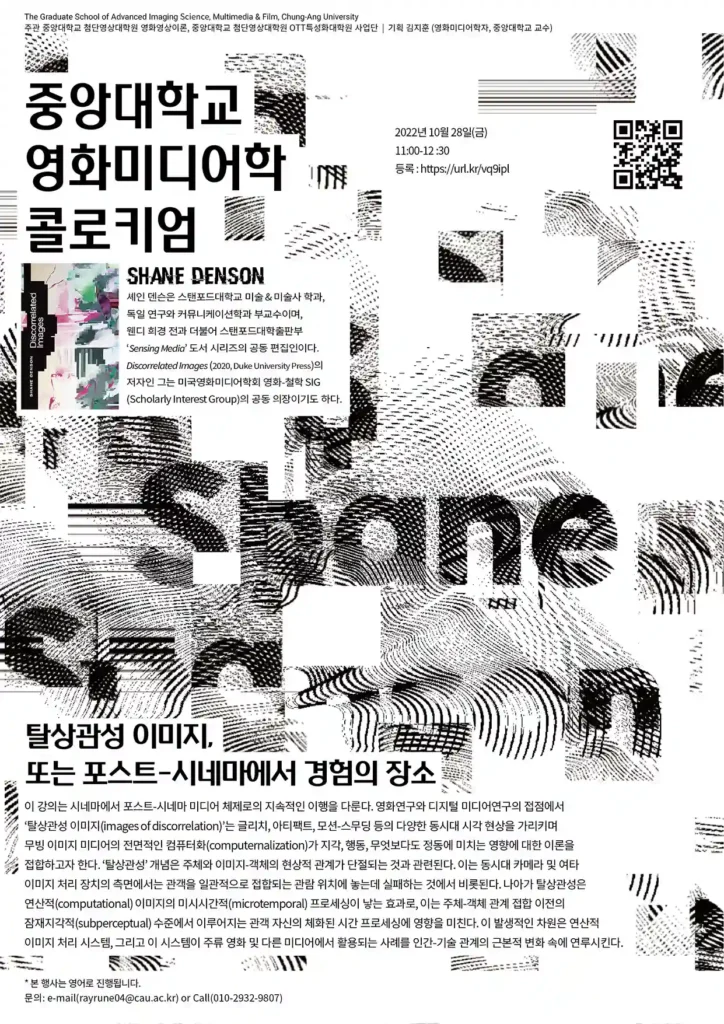
Shaneย Denson ๐Ÿ“ผ
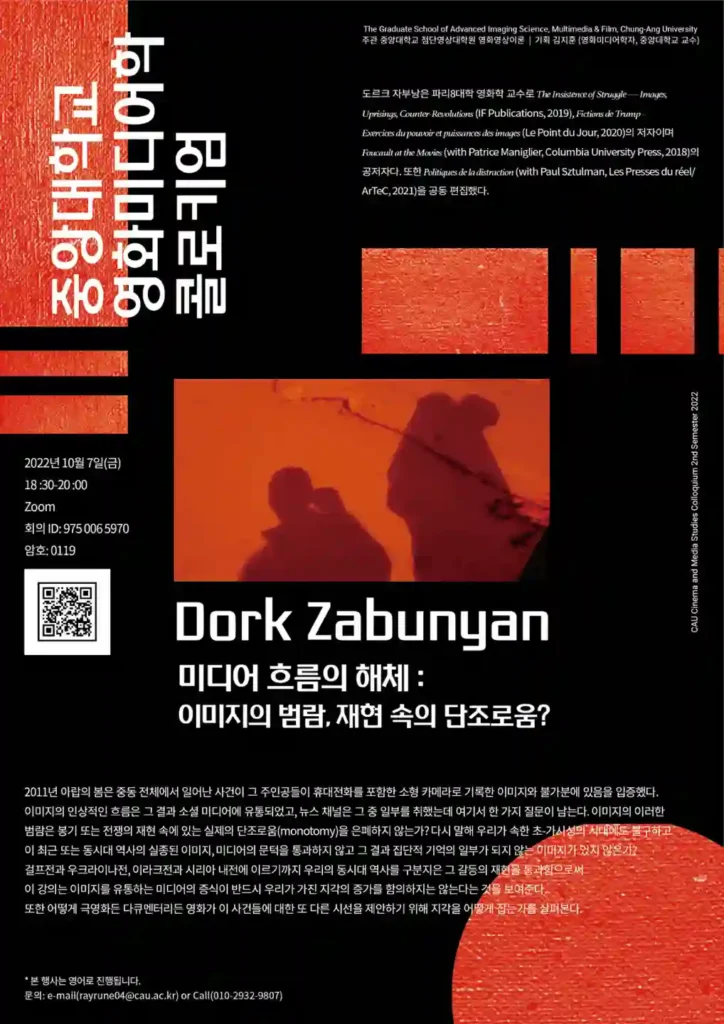
ย Dork Zabunyan
Scroll to Top